Hose guide for coastal and island mines in the Philippines
How salt air, monsoon rain and laterite mud shorten hose life, and simple checks that help.
Island mining conditions and how they affect hose
Philippine mines are tropical, coastal and often remote. These are the conditions we quote for.
| Condition | What it does to hose | How we quote for it |
|---|---|---|
| Typhoon and monsoon rains | Flooded benches and mud around undercarriage hoses | Sleeves on low runs and fittings with corrosion protection |
| Salt air near the coast | Corrosion on ferrules, nuts and flanges | Plated fittings and inspection advice for coastal sites |
| Laterite nickel ore | Fine, sticky ore mud packs around lines | Routing away from build-up points and abrasion guards |
| Seasonal ore shipping | The fleet must be ready before loading starts | Kits ordered so they arrive before the shipping season |
Corrosion comes first
At coastal mines, the first sign of trouble is often rust on the ferrule or nut, not a leak. Corrosion weakens the crimp and the threads, and the assembly can fail at the end even when the hose itself looks good.
Plated fittings help, but regular washing and inspection matter most. Check ends closely after each wet season.
Mud and routing
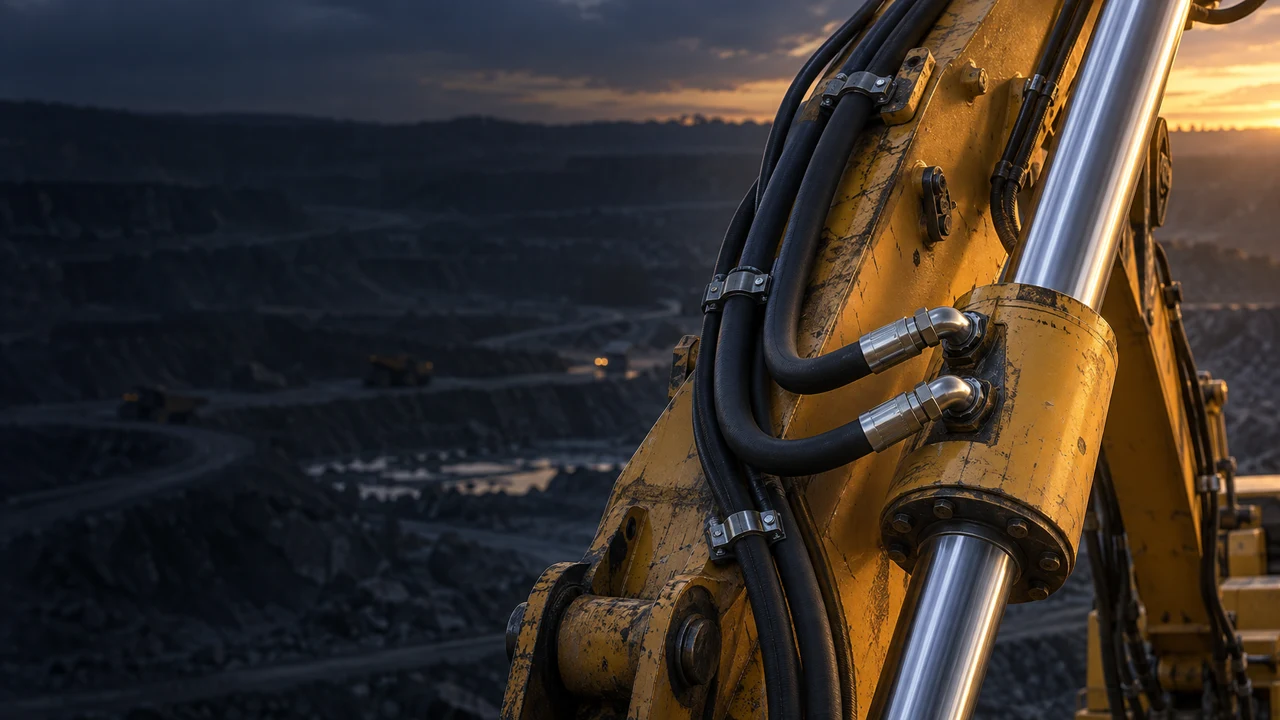
Laterite ore becomes a sticky paste in the rain. Where it builds up around hoses, it holds moisture and wears the cover. Look for build-up points near the undercarriage and arm cylinders, and add clamps or sleeves where lines move against each other.
Plan around the shipping season
Most nickel mines load ore in the drier months. Rebuilding hoses before that period avoids stops at the busiest time. Ordering kits per machine, early, is the simplest way to do it from an island site.
Checklist for maintenance teams
- Inspect ferrules and nuts for rust after every wet season
- Wash before inspection
- Clear ore build-up around hose runs
- Replace worn sleeves and missing clamps
- Order kits before the shipping season